

Most attestation problems are not attestation problems. They are ordering problems. A document is stamped in the wrong sequence, or it arrives at the UAE embassy without the step that embassy requires first, and the whole thing goes back in the envelope.
So let us start with the question that causes the most wasted money.
Does an Apostille work for the UAE?
No. And this is worth being blunt about, because a lot of published advice is wrong on it.
The Hague Conference publishes a status table of every Contracting Party to the Apostille Convention. In the table dated 30 June 2026, there are 130 Contracting Parties, and the United Arab Emirates is not one of them. No accession date, no entry into force, no signature. The UAE is not a member of the Hague Conference either.
The Convention only operates between two Contracting Parties. Since the UAE sits outside it, an Indian, Pakistani, Philippine or British Apostille has no legal effect here on its own.
| Gulf state | Apostille Convention status |
|---|---|
| Oman | Party since 30 January 2012 |
| Bahrain | Party since 31 December 2013 |
| Saudi Arabia | Party since 7 December 2022 |
| United Arab Emirates | Not a party |
| Qatar | Not a party |
| Kuwait | Not a party |
Note Saudi Arabia in that table. The commonly repeated line that "only Bahrain and Oman among GCC states have joined" has been out of date since December 2022.
Here is the part that confuses people. Several UAE missions now require an Apostille as the home-country foreign-ministry step, and then stamp their own legalisation on top of it. The UAE Embassy in Manila puts it plainly: "All documents for authentication to the Embassy must bear the DFA Apostille." Prerequisite, not substitute.
The five links in the chain
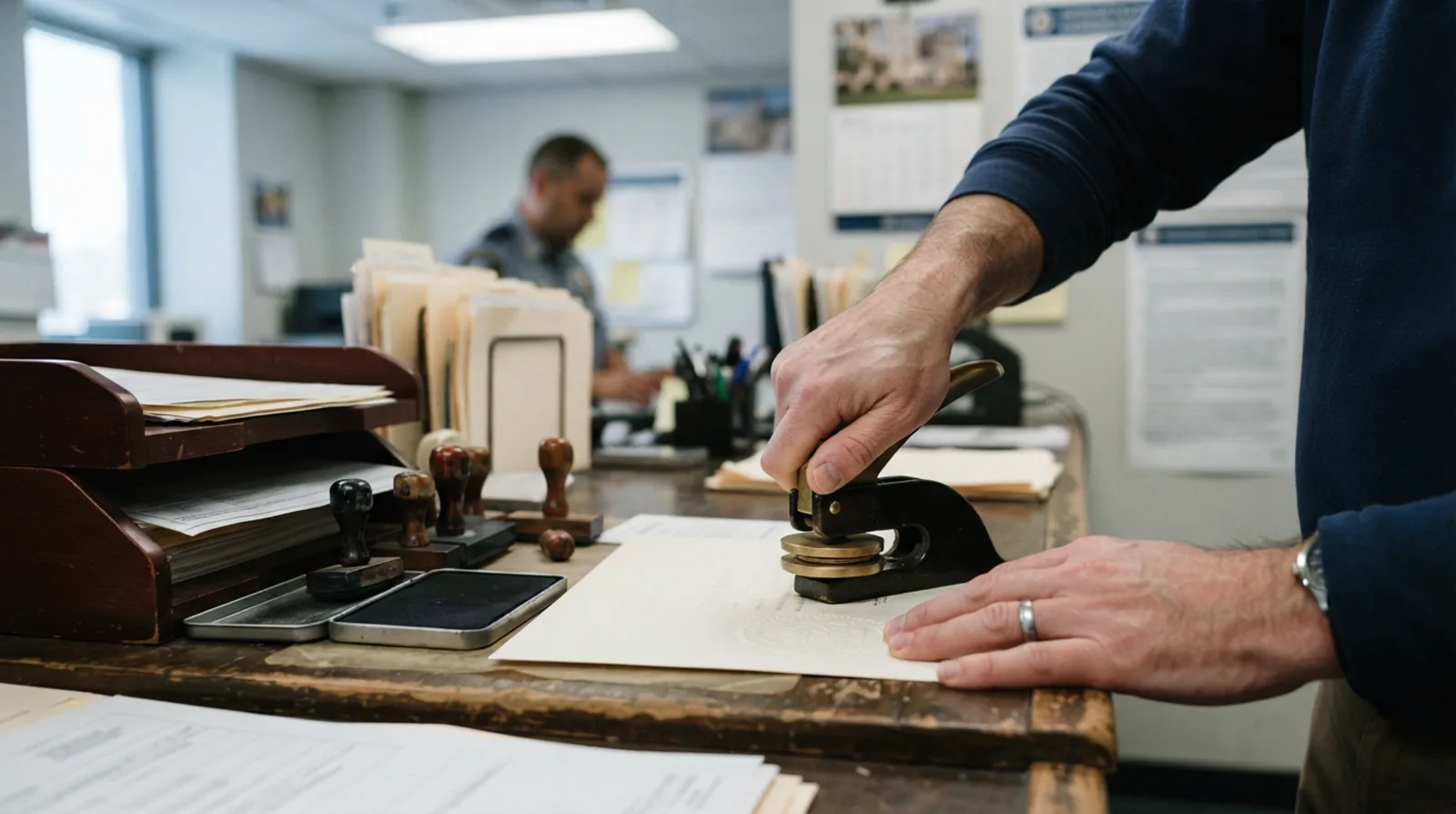
Three separate UAE authorities describe the same chain: Dubai Courts, UAE MOFAIC, and the UAE Government portal. When the courts, the foreign ministry and the national portal all describe an identical sequence, that is the sequence.
- Issuer or notaryThe university, hospital, registrar or notary that produced the document certifies it.
- Home-country designated authorityThe state education department, HRD, Home Department, technical board or Chamber of Commerce, depending on the document type.
- Home-country Ministry of Foreign AffairsOr the designated Apostille authority where that country uses one for this purpose.
- UAE embassy or consulate <em>in that country</em>This is the step people try to skip because it is slow. It cannot be skipped. Where no UAE mission exists in the issuing country, contact UAE MOFAIC for the route.
- MOFAIC inside the UAEThe final attestation, done here. Without it, the document is not usable in the UAE.
Dubai Courts states the requirement for a power of attorney issued abroad in almost these exact terms: attested by the foreign ministry of the respective country, the UAE embassy in that country, and then MOFAIC in the UAE.
What MOFAIC attestation costs
| MOFAIC attestation | Fee (AED) |
|---|---|
| Personal status document (birth, death, marriage, divorce) | 150 per document |
| Educational and other personal certificates | 150 per document |
| Commercial document | 2,000 per document |
| Commercial invoice or certificate of origin via eDAS 2.0 | 150 flat per invoice |
| Birth or death certificate via the MOHAP integrated route | 300 total (150 MOFAIC + 150 UAE embassy abroad) |
One live conflict, and it is expensive if you guess wrong. MOFAIC's FAQ prices a non-commercial power of attorney at AED 150. The UAE Embassy in Amman states that "powers of attorney and commercial certificates cost AED 2000". Both are official UAE pages. The practical reading is that classification depends on whether the POA is commercial. Budget AED 2,000 for a POA unless MOFAIC confirms otherwise for your specific document.
You will also see "AED 50 to 100 MOFAIC service, knowledge or innovation fee" quoted around. We could not find it on any official MOFAIC source. The Knowledge and Innovation Dirhams are a Dubai Government levy: Dubai Courts, for example, charges AED 100 plus AED 20 Knowledge and Innovation for a POA ratification. Do not attribute those to MOFAIC.
How long each step takes
| Step | Published time |
|---|---|
| MOFAIC digital attestation | Within 2 hours during business hours |
| MOFAIC courier-based attestation | 1 to 3 business days |
| eDAS 2.0 invoice or certificate of origin | 2 minutes, 24/7 |
| School certificate via the Emirates Schools Establishment link | 3 minutes (previously six days) |
| UAE Embassy London | Up to 5 working days, postal only |
| UAE Embassy Manila | 3 to 5 working days minimum |
MOFAIC runs its services online through mofa.gov.ae with UAE PASS sign-in and through the UAEMOFA app. Courier is handled by Aramex, Emirates Post, Zajel and Tawzea, from AED 31.50 regular to AED 150 express, with up to 25 documents per regular transaction and 10 per express. Rejected applications are refunded within 14 working days.
Newer, and worth knowing: MOFAIC launched a pilot digital attestation service on 27 April 2026 that cuts the process from eight steps to three, adds QR codes and reference numbers for verification, accepts up to five documents per application, and completes within two working days. It covers UAE-issued documents heading abroad.
India: the MEA route
India has been an Apostille member since July 2005. For a UAE-bound document, that is irrelevant, and this is where most Indian applicants lose time.
The chain runs: issuing institution → State or UT designated authority → MEA "Normal Attestation", not Apostille → UAE Embassy New Delhi or Consulate Mumbai → MOFAIC.
Which state authority depends on the document. Educational documents are pre-authenticated by the Education Department or HRD of the state. Personal documents go through the Home Department or General Administration Department. Commercial documents go through the relevant Chamber of Commerce.
MEA's own wording for non-Convention destinations: it "legalises the documents on the basis of the signature of the designated signing authorities of the State Government / Union Territory / Chambers of Commerce." That is the Normal Attestation stamp, and it is the one the UAE embassy expects.
Since July 2012 the MEA has not accepted documents from individuals at its counter. Submission runs through authorised outsourcing agencies across sixteen cities.
On fees, MEA's own pages disagree with each other. The page updated 26 May 2026 says Normal Attestation is free from MEA, with an agency charge of ₹84 per document plus ₹3 per page for scanning. An older MEA page still lists legacy agency charges of ₹22, ₹18 and ₹16. Use the newer figure and expect the agency, not the ministry, to be the one charging.
Pakistan: HEC, IBCC and MOFA
Chain: issuer → HEC for university degrees, IBCC for SSC and HSSC, the relevant technical board, Chamber of Commerce for commercial, or the Ministry of National Health Services for medical → MOFA Pakistan → UAE Embassy Islamabad or Consulate Karachi → MOFAIC.
| MOFA Pakistan document type | Official fee (PKR) |
|---|---|
| Personal | 3,000 |
| Educational | 3,000 |
| Experience certificate | 3,000 |
| Legal | 4,500 |
| Commercial | 12,000 |
Two rules from MOFA Pakistan's own SOPs that catch people out. First, "This Ministry will only attest the documents in Urdu/English." Second, personal appearance is mandatory for POA executants, bank board resolutions, employment contracts with foreigners, and affidavits. Appointments are booked online.
You will see agent sites quoting PKR 2,500 per document. The official schedule says PKR 3,000. Use the official one.
Philippines: Apostille first, then the embassy
The clearest illustration in this whole article of why an Apostille is not a shortcut.
The Philippines has been an Apostille member since May 2019, and the DFA is the Competent Authority. Yet the UAE Embassy in Manila requires the DFA Apostille and then legalises on top of it. Fee: PHP 2,350 per document, with same-type documents groupable into one transaction. Timeline: three to five working days minimum.
Submission runs through the MOFAIC website or UAEMOFA app, by courier, or in person by email appointment. After the embassy step, the document still needs MOFAIC attestation inside the UAE.

United Kingdom: FCDO then London
Chain: UK solicitor or notary certification where needed → FCDO Apostille → UAE Embassy London → MOFAIC.
The FCDO charges £45 per document on the standard service and states it usually takes up to 25 working days plus courier time. The premium service is £100 and same-day, but it is restricted to registered businesses with pre-approved applications. Courier runs from £5.50 in the UK to £29.50 per 1.5kg for the rest of the world.
The UAE Embassy in London is postal only. Its page is explicit: "Documents cannot be submitted or collected in person, they will be accepted only by post." You need the online payment receipt, a covering letter, a self-addressed registered envelope, and front-and-back photocopies of each document. Up to five working days. Payment is online only, with a transaction fee of AED 3 plus 2%.
That 25-working-day FCDO standard service is the reason UK attestation timelines look so different from Indian ones. Plan around it.
Where files break
In order of how often we see them.
- Lamination. MOFAIC will not attest a laminated document. Neither will most missions. There is usually no fix short of reissuing the original.
- Skipping the UAE embassy abroad. People assume MOFAIC can attest a foreign document directly. It cannot. The mission step happens in the issuing country.
- Apostille instead of the full chain. Covered above. Costs an average of three weeks when it happens.
- Wrong state authority in India. An educational certificate routed through the Home Department instead of the Education Department comes back.
- Name mismatches. Passport spelling versus certificate spelling. If they differ, resolve it before the chain starts, not at the embassy counter.
- Bundling. Documents apostilled as a bundle are not accepted. Each one goes separately.
When Arabic translation is also required
Attestation makes a document genuine. It does not make it readable to a UAE court.
Where a document is going to a court, a notary or certain government departments, it also needs an Arabic translation by a translator licensed by the Ministry of Justice. That is a separate step, after attestation, and it has its own rules. We cover it in legal translation in the UAE, and the service itself sits on our certified legal translation page.
MSM runs attestation chains for applicants from more than twenty countries and coordinates the embassy legs from Dubai. Send a photo of the document and tell us what it is for, and we will map the exact chain and the realistic timeline. Start at certificate attestation or translation and attestation.