


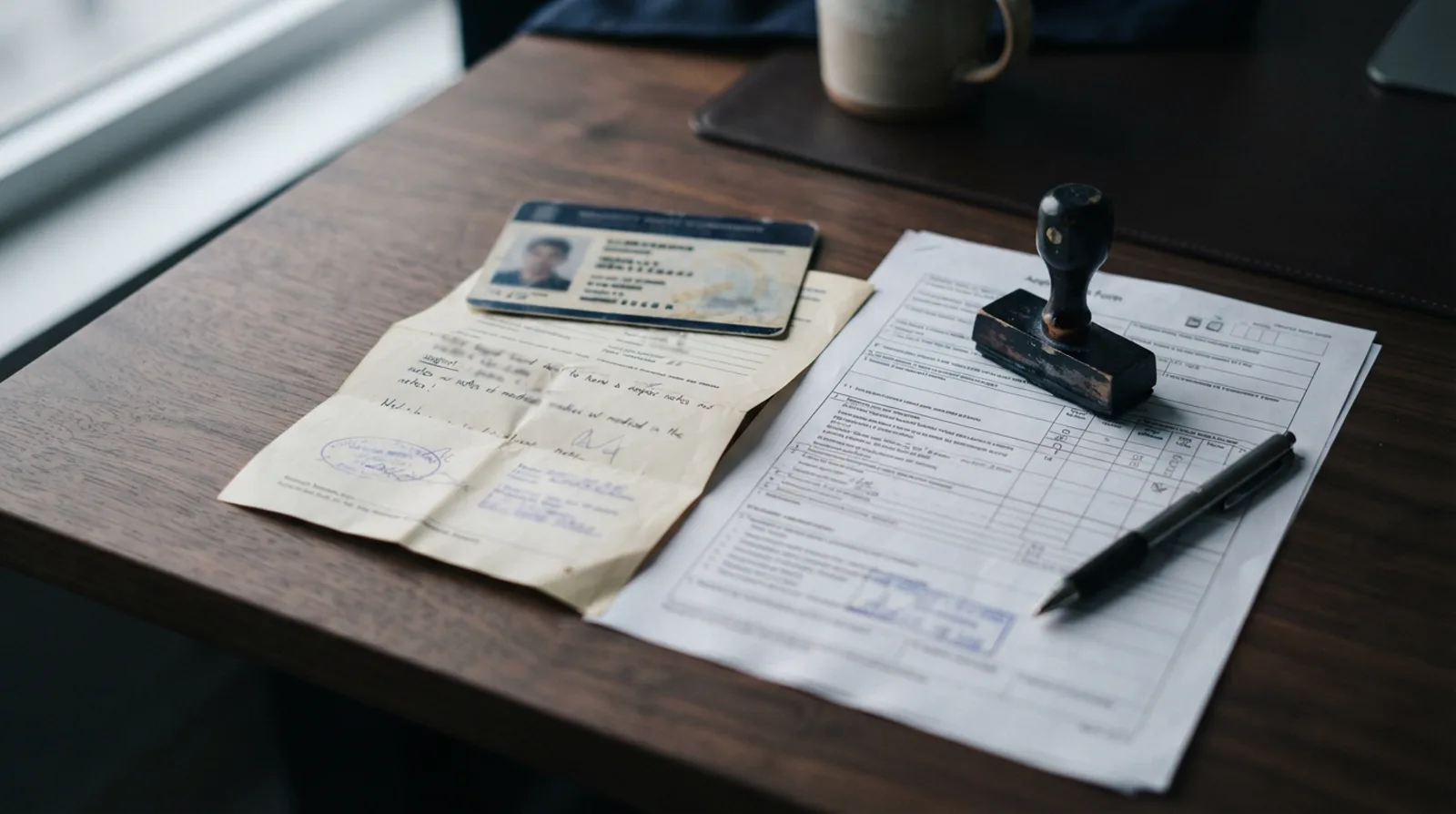
People describe this as one process. It is four, run by two different federal bodies, with a single deadline running underneath all of them.
Once you see the sequence and the clock, the whole thing becomes a scheduling problem rather than a bureaucratic one.
The four steps, in order
| # | Step | Authority | Published time |
|---|---|---|---|
| 1 | Medical fitness test | Dubai Health / approved centres | 24 working hours, regular service |
| 2 | Emirates ID application and typing | ICP, via app, portal or typing centre | Same day to submit |
| 3 | Biometrics and signature | ICP Customer Happiness Centre | In person, minutes |
| 4 | Residence issuance | GDRFA Dubai, or ICP outside Dubai | Electronic |
The 60-day clock everything runs inside
Two 60-day windows govern a new residence file, and the second is the one that generates fines.
ICP states the first verbatim: the holder "must enter the UAE within the 60-day validity period of the entry permit from its date of issuance."
Then the second: the stay "does not exceed sixty (60) days from the date of entry for the purpose of completing the residence issuance procedures." GDRFA Dubai words it the same way.
Everything on this page has to fit inside window two. Miss it and the fine is AED 50 per day, flat and uncapped, per ICP's published fines schedule. Detail in UAE visa overstay fines and grace periods.
Step 1: medical fitness
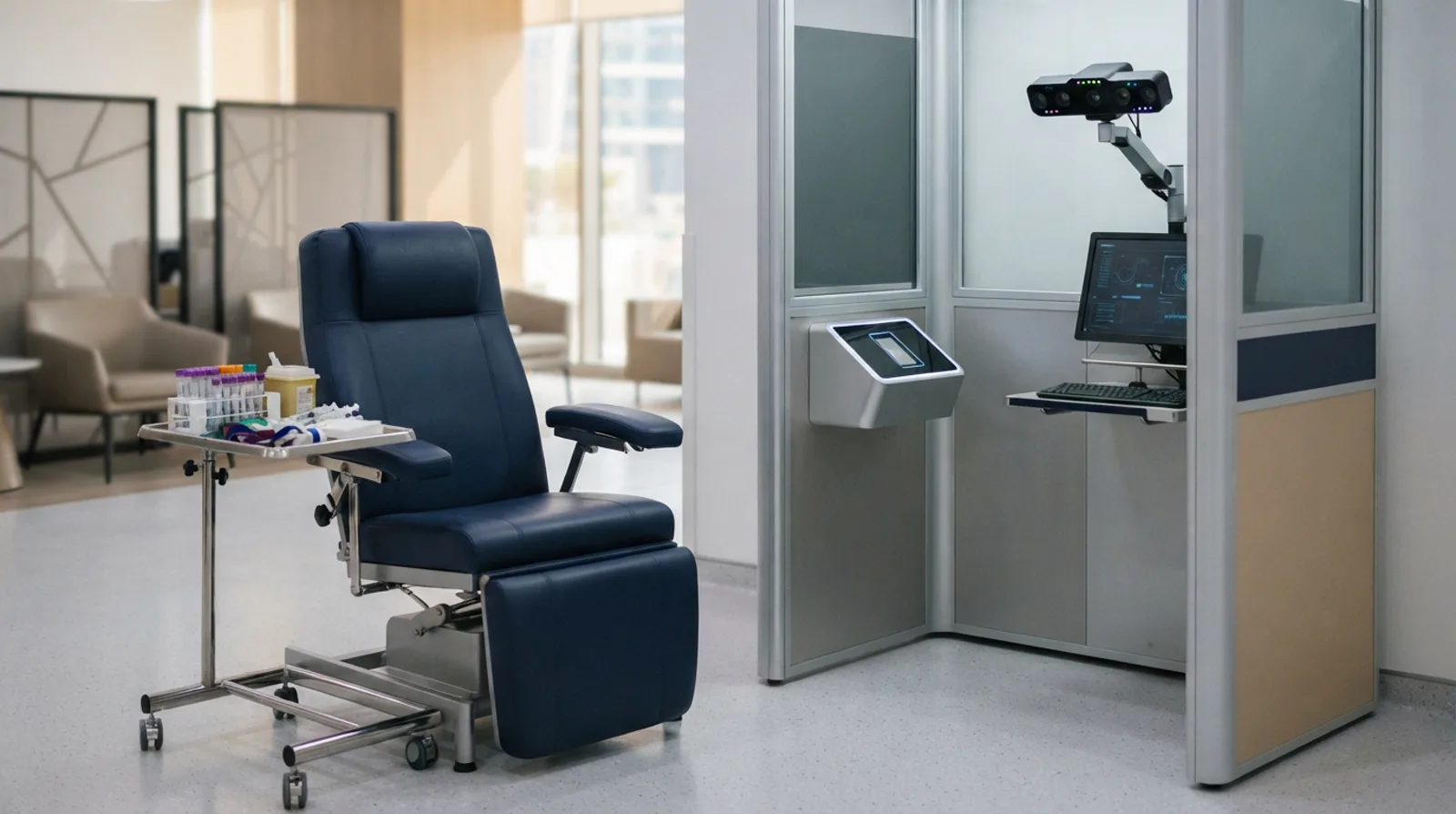
Blood collection and a chest X-ray. That is what Dubai Health lists, plus vaccinations for certain profession categories only.
All foreign nationals are screened for HIV and tuberculosis. Syphilis and hepatitis B apply to specific occupational groups such as nursery workers, domestic workers, food handlers, salon staff and health-club workers. Female domestic workers are also tested for pregnancy.
| DHA service | Turnaround | AED |
|---|---|---|
| Regular Medical Fitness Service | 24 working hours | 250 |
| Express Medical Fitness Service | 6 working hours | 700 |
| VIP Medical Fitness Service | 2 working hours | 1,020 |
| Smart Salem Center | 30 working minutes | 700 |
| Tawajod, at your location in Dubai | 20 minutes | 1,020 |
Dubai Health lists 25 centres. Al Muhaisnah is the only 24-hour one. Full detail in the Dubai medical fitness test.
Bring the completed registration form, your original Emirates ID or passport, a recent passport-sized photograph with a white background, and a copy of the e-Visa. Booking runs through the Salem portal, and walk-ins are accepted.
On results: a positive finding is not the automatic exit people assume. Cabinet Resolution 75 of 2022 allows 30 days from notification of the result for the purpose of the residency request to be changed, and the UAE Government portal confirms that applicants with TB scars, active TB or drug-resistant TB can receive a conditional fitness certificate and a one-year residence visa conditional on treatment in the UAE.
Step 2: the Emirates ID application and typing
The application can be submitted three ways: ICP Smart Services online, the UAE ICP app, or an approved typing centre.
The typing centre route is where the one legally fixed fee in this whole process lives. The Emirates ID typing office fee is AED 70, set by Minister of Interior Decision 3 of 2012 under Cabinet Decision 25 of 2011, broken down as AED 10 for registration form design, AED 30 for data verification and AED 30 for first form printing. ICP has publicly warned that centres charging more will have their certification cancelled.
Everything else a centre adds is a commercial service charge, unregulated and negotiable. Ask for the split.
The arithmetic behind the AED 70 is worth knowing because it explains the other figure you will see quoted. AED 10 for form design plus AED 30 for data verification is AED 40, which is the portion payable whatever channel you use and matches the online application fee. Add the centre's own AED 30 printing and you reach AED 70. A subsequent centre printing an amendment form charges AED 5.
ICP's own fee schedule for the card itself lists AED 100 per year of residence for residents, plus a AED 100 smart service fee, with urgent service at AED 150 available only at ICP centres. Service completion is five days, and ICP has publicly confirmed it does not charge for card delivery.
Step 3: biometrics
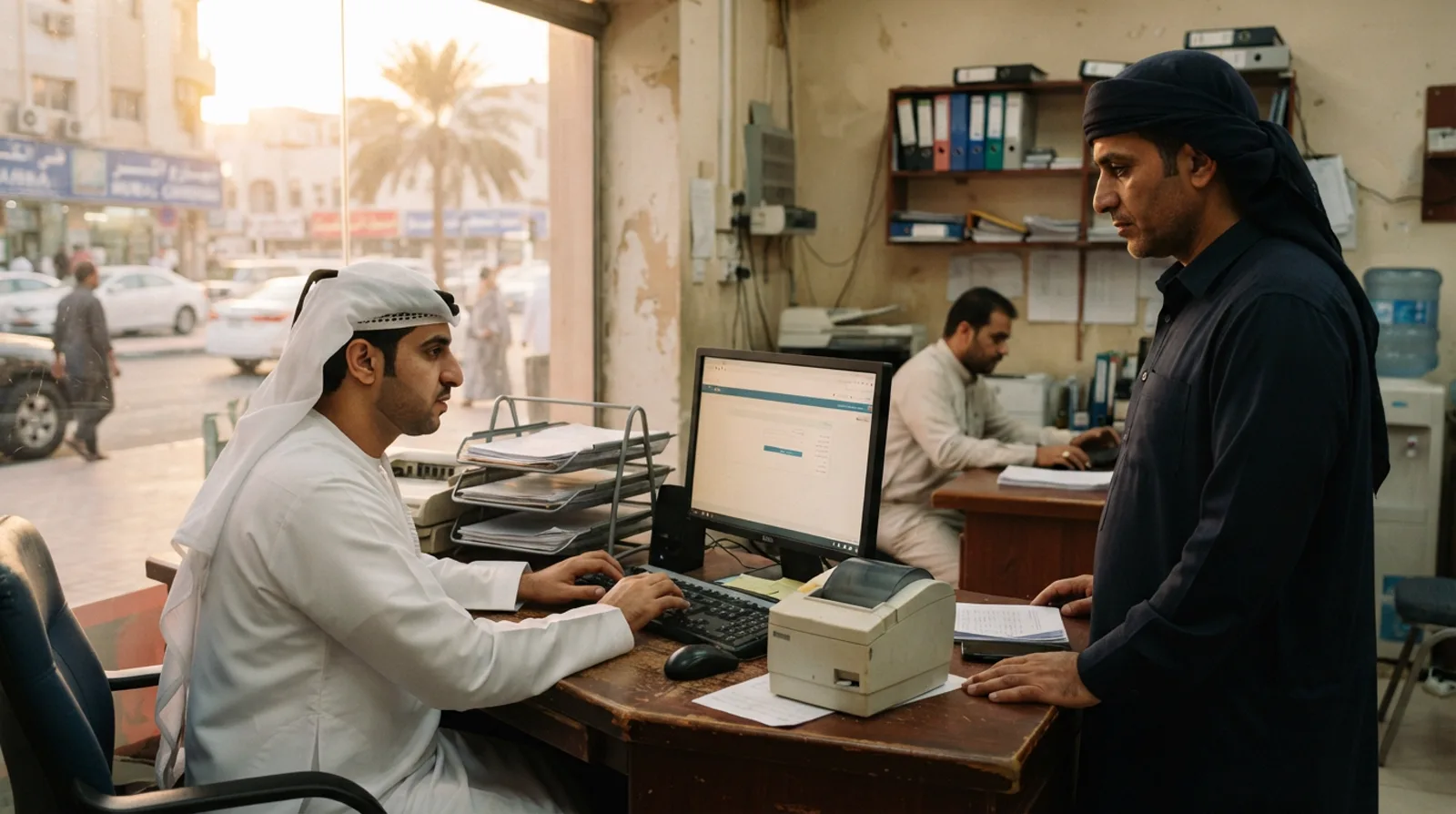
This is the only step that cannot be done remotely.
ICP's rule: "The applicant must have a signature and fingerprint registered on the Emirates ID if they are over 15 years old." Biometric procedures are required at ICP service centres for anyone 15 and above, including on renewal.
Children under 15 do not attend. ICP's Basmah 15 initiative also captures ten fingerprints for school students aged 15 and above, which sometimes means the step is already done.
In Dubai, biometrics happens at an ICP Customer Happiness Centre, not an Amer centre. There are seven: Al Barsha, Al Ghazal, Al Rashidiya, Al Nahda, Al Yalayis, Al Baraha and Hatta. More in biometrics for UAE residency.
Step 4: residence issuance
The residence permit is issued electronically, and this is where a widely repeated misconception needs correcting.
There is no visa sticker. GDRFA Dubai suspended sticker issuance on 11 April 2022, with new procedures effective 8 April 2022, merging the residence permit with the Emirates ID and sending applicants a soft residence copy by registered email. ICP followed for Abu Dhabi, Sharjah, Ajman, Umm Al Quwain, Ras Al Khaimah and Fujairah on 16 May 2022.
Dubai moved first, roughly five weeks ahead of the federal rollout, which is the opposite of what most guides assume. And this is a 2022 change, not a recent one, so anyone presenting it as news is working from stale material.
The practical consequence: your residence status lives on the Emirates ID record. An expired Emirates ID is an expired proof of residence. See Emirates ID renewal and the daily fine.
Who does what, and where
| Task | Where it goes |
|---|---|
| Residence visa, entry permit, status change in Dubai | Amer / GDRFA Dubai |
| Emirates ID application, renewal, replacement | ICP, online or app |
| Biometrics and signature capture | ICP Customer Happiness Centre |
| Medical fitness test | Dubai Health approved centre, booked via Salem |
| Work permit and labour contract | Tasheel / MoHRE |
| Typing an application for submission | Approved typing centre |
Note that Tasheel and Amer are trade names of licensed private companies rather than government departments. The authority sets the government fee; the centre adds its own service charge. Full map in Amer vs Tasheel vs typing centre.
What the whole thing costs
| Line | Published figure |
|---|---|
| Medical fitness, regular | AED 250 |
| Emirates ID, residents | AED 100 per year of residence |
| ICP smart service fee | AED 100 |
| Emirates ID typing office fee | AED 70, fixed by law |
| ICP urgent service | AED 150, in-person collection only |
| In-country status change | AED 500 government fee |
| Emirates ID service completion | 5 days, courier delivery at no charge |
One honest caveat on totals. Whether the AED 100 smart service fee stacks on top of the AED 40 or AED 70 application fee is not something we could reconcile: ICP's pages list only the AED 100, while other official-adjacent accounts total replacements without it. Ask for an itemised receipt rather than accepting a single number.
Where files stall
Four causes, and none of them are the government being slow.
- Biometrics booked lastIt requires the person in a specific place during working hours, and appointment availability is the constraint. Book it the day the medical is booked, not after the results arrive.
- The employee travels mid-windowSixty days from entry sounds generous until someone takes a two-week trip home in the middle of it.
- A previous visa was never cancelledA status change requires the previous residence permit to be cancelled. An old employer who left it open has to be chased first.
- Walking into the wrong centreAmer for residency, ICP for Emirates ID and biometrics. One wrong turn is a morning.
MSM runs medical booking, Emirates ID typing, biometric appointments and residence issuance as one sequenced job across Dubai Health, ICP and GDRFA. Send the entry permit and passport copy. See Emirates ID services, medical and occupational typing or typing and clearance.